
2 of 26 Strategy Revelations for 2026
Why Work Friendships Are Smart Strategy
Initial Question: Is having a best friend at work really that important?
Primary Source: https://hbr.org/2026/01/dont-underestimate-the-value-of-professional-friendships
In my quest for interesting and inspiring source material for this 2nd of my 26 Strategy Revelations for 2026, I found myself spiraling into a link vortex of increasingly compelling perspectives on my initial query: is having a “best friend” at work really as important as Gallup says it is?
It all started when I stumbled across the HBR article “Don’t Underestimate the Value of Professional Friendships” which serves as a great reminder of why professional friendships are just an all-around good thing to encourage within your organization and invest in personally. As I read the author’s insights and recommendations for nurturing this philosophy, I was immediately reminded of how frequently this question comes up in the course of our organizational effectiveness and culture work with our clients. Coraggio frequently leverages the Gallup Q12 survey among other proprietary survey questions as a measure of employee engagement, and it’s not uncommon for a team member to challenge the relevance of their team’s scores on the “I have a Best Friend at Work” question. The Gallup Q12 is a scientifically validated 12-question survey tool that measures employee engagement, identifying core workplace elements linked to higher productivity, profitability, retention, and customer loyalty. This question can sometimes feel like a thorn in the side of leaders, as it is often the lowest scoring question, causing some to second-guess its relevance to high performing teams and engaged culture.
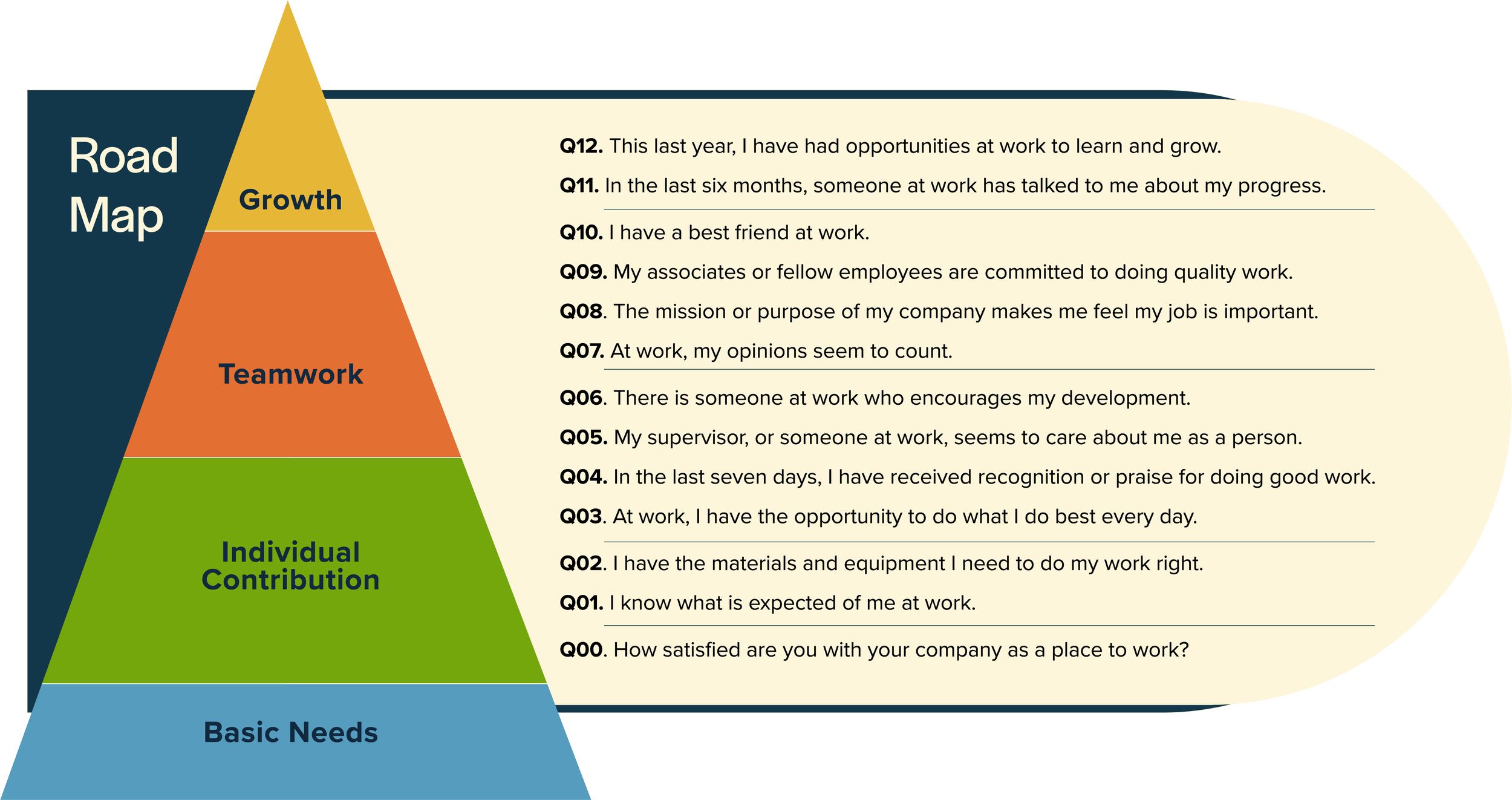
Source: Gallup Q12 Questions; Infographic by Coraggio Group
Revelation 2 of 26
So as I did a quick secondary search for a quick reminder of the Gallup organization’s defense of this very frequently challenged question, I came across another great article on the topic, which I hadn’t read before, which underscores that not only is having a best friend at work a reliable predictor of an organization’s productivity, profitability, retention, and customer loyalty, but it has become an even more important indicator of these outcomes despite a rise in remote and hybrid work environments, post-pandemic and beyond. Having a meaningful interpersonal connection to a work colleague can bridge the gap of geographical distance, reduce the feeling of “going it alone”, and re-establish connection and meaning among remote workers who no longer benefit from the social environment of an in-person team or office dynamics.
It shouldn’t be difficult to imagine that employees who feel a strong connection to one or more colleagues will ultimately be more engaged in their work than someone who does not have those same relationships in place. Abraham Maslow’s well-known theory of human motivation is rooted in the idea that we all are driven by a need to satisfy our core requirements of existence. From basic survival needs of food and shelter to feeling a sense of belonging or receiving recognition for our accomplishments, Maslow argues that all human behaviors are ultimately driven in a quest for meeting these needs in an escalation of our attention and effort, in a quest for self-actualization.
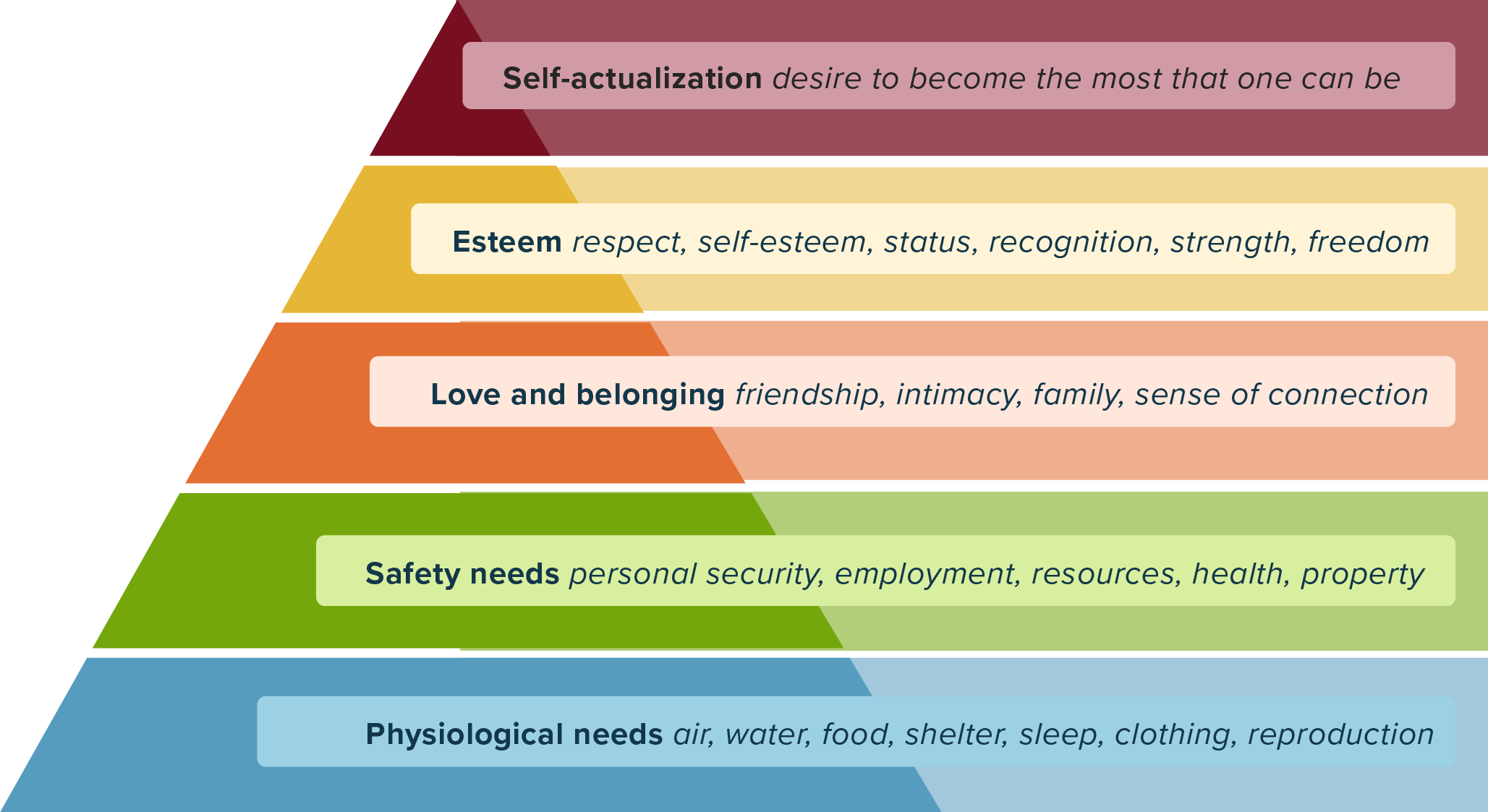
Maslow’s Hierarchy of Needs
Self-actualization
Esteem
Love and belonging
Safety needs
Physiological needs
The similarities between Maslow’s hierarchy of needs and Gallup’s Q12 questions are not coincidental; in fact, they’re intrinsically linked. Our behaviors and motivations at work extend directly from our general individual motivations. Most of us work for income, which is required to meet basic needs, but can also enable us to unlock higher-level needs in our pursuit of higher-level needs.
With this as context, it would logically follow that when we share experiences with others, whether work-related struggles or day-to-day inside jokes and experiences, we are more likely to feel a sense of kinship and collaboration, and are therefore more likely to bring our talents and energy to the workplace in support of that friend and colleague. If our reasons for doing our best work extend beyond benefitting our client/customer or even our employer, and if our effort is not rooted merely in our own need to survive, then feeling accountable to a friend at work (i.e. love and belonging) can be a compelling reason for pushing through a heavy workload or a challenging project or dealing with a tough customer. We don’t want to let our friends down so we find a way to go the extra mile – for them. Knowing that those friends also have our back and celebrate our successes in return, we benefit from an environment of belonging, safety and support.
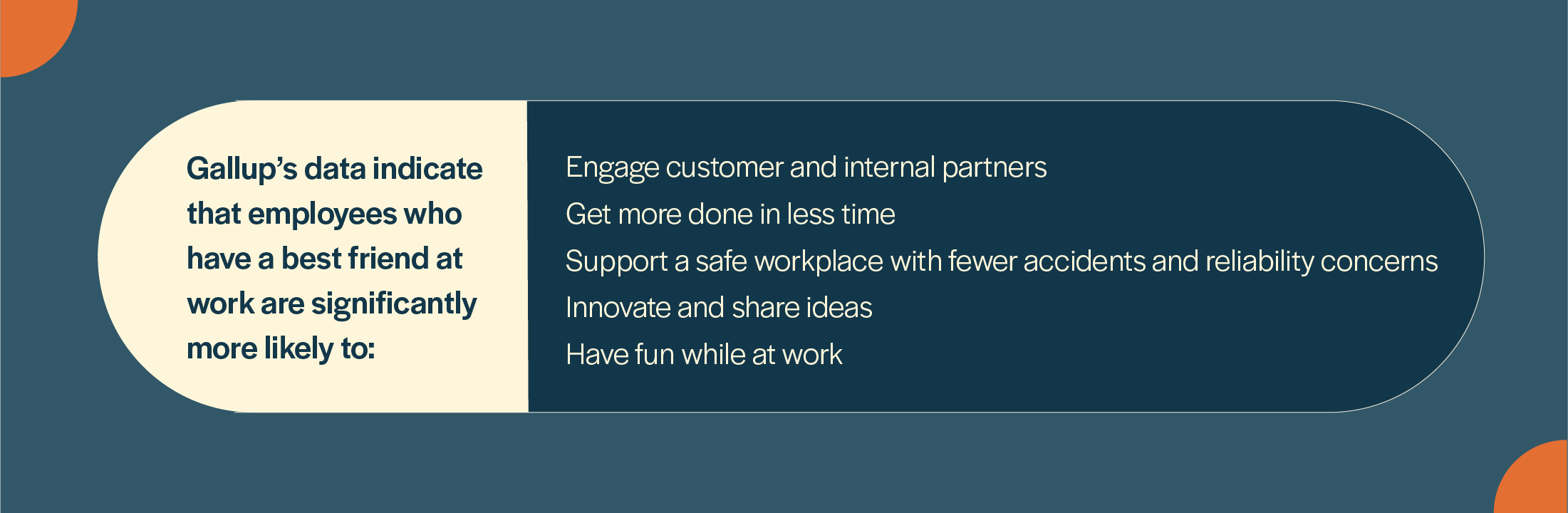
Source: gallup.com
So what can we do to encourage and support friendships at work, especially in an increasingly remote working environment? There are a few best practices that will naturally encourage work friendships to develop, and these actions should start at the top of the organization in order to enable a connected culture to permeate and grow.
Affirm that work friendships are encouraged and supported: communicate clearly that friendships and connection are valued in the workplace, share resources in support of connection, create and support affinity groups, encourage social time in and out of office hours, etc.
Facilitate opportunities for building meaningful interpersonal connections: in-person meetings, team-building events and gatherings, engage in connection activities such as Clifton Strengths assessments and team learning, etc.
Celebrate friendships and collaborations and connection among team members: identify and recognize examples of successful collaboration and teamwork, share best practices that reinforce positive outcomes of close work collaborations and shared contributions, etc.
“Gallup data indicate that having a best friend at work is strongly linked to business outcomes, including profitability, safety, inventory control and retention.”
- Alok Patel and Stephanie Plowman, The Increasing Importance of a Best Friend at Work (2022)
I’ll admit that I’ve been a skeptic of this idea at times in my career. I’ve seen situations where the dichotomy of being someone’s friend while also being their boss or having a more senior role can create impossible dilemmas. From a relationship standpoint, no one wants to give a tough performance review to a friend, or – even worse – to have to lay off a friend, even though it may become your responsibility to do so. Perhaps being best friends with the specific people that you supervise in the workplace may be too literal an interpretation of Gallup’s data and recommendations, but it’s clear that having workplace friends is an important aspect of healthy workplace culture, greater employee engagement, higher productivity, and greater sense of workplace satisfaction.
Those reasons alone are compelling enough to give it a concerted effort. Even without cited data to prove it, I can confidently state that true friends truly enrich our lives.

“In the end, the healthiest organizations and the most fulfilled leaders are those that treat friendship not as a distraction from business but as a powerful antidote to the isolation that undermines performance and well-being.”
- Paul Ingram, Kravis Professor of Business at Columbia Business School
In summary, my takeaways from this brief thought exercise are twofold:
Building and encouraging workplace friendships is a smart strategic investment. Work friendships will most certainly result in deeper and more meaningful mutual benefit, satisfaction, productivity, and engagement – both personally and professionally.
Put it on your 2026 to-do list to invest in an employee engagement strategy to gauge and manage the pulse of your organization’s most important assets: your people. (in the High Importance/High Urgency priority quadrant) Read #1 of 26 Strategic Relevations Hint: Coraggio would love to work with you on this to support an engaged workplace culture and optimize your organization’s effectiveness.