
Great strategies deserve organizations built to carry them.
A strategy only matters if your organization can deliver it. We work with leadership teams on what decides whether the work actually takes hold: how you're structured, how you decide, how you manage change, how you work together. When those line up, your strategy shows up in how your people and processes operate every day.
The strategy is rarely the problem. The organization is.
Most plans don't fail because the thinking was wrong. They fail because the structure, the decision rights, the culture, and the capacity weren't ready to carry them. Here's what leaders tell us changes once structure and strategy line up.
- Priorities move forward without you pushing every one of them.
- The right people make decisions at the right level, at the right speed.
- Your strongest people get to do the work you hired them for.
- New work gains traction because the organization is built to carry it.
Organizations need to do the work of intentionally designing themselves to execute on new strategy. The biggest reason strategic plans fall short is a lack of organizational alignment in capabilities or capacity, or both.
We look at the whole organization, not one piece in isolation.
Every part is connected, so a change in one can shape the others. That is how we find the strengths you can build on and the opportunities worth your attention. This is the lens we bring to the work. Hover over any part to see how it connects.
Strategy and structure, designed together.
Most firms treat these as two separate projects. We don't. When organization structure comes in early, instead of getting bolted on later, the strategy gets sharper and the organization is ready to carry it. It starts with a clear read on organizational health across eight domains, so the redesign focuses on the gaps that get in strategy's way.
Organizational health, measured
Illustrative profile. Every engagement charts its own. Tiers are qualitative, not scored.
Three ways we strengthen the organization.
Start where it hurts. Each area works on its own or as part of a larger engagement. We scope it to where you are and where you want to go.
Whole-Systems Design
We redraw structure, roles, and decision rights around the strategy. As one system, not a patched org chart.
- Org structure & role clarity
- Decision rights & accountability
- Governance & operating model
Change That Sticks
The discipline that turns a decision into daily practice. Change management and process work built for follow-through.
- Change management & rollout
- Process improvement
- Decision-making frameworks
Team Effectiveness
Leadership teams that trust each other, align quickly, and lead change together. This is where effectiveness starts.
- Leadership team alignment
- Team effectiveness & trust
- Leadership development
Built with your people, not just for them.
Constituent engagement isn't a separate workstream — it's how we run the work. We bring the people you serve and depend on into the process, so the direction carries their fingerprints and their support.
See how we engage constituents- 01Listen firstStructured listening across everyone who has a stake in the outcome.
- 02Build with, not forDirection shaped alongside your constituents, never handed to them.
- 03Many voices, one directionWe turn a wide range of input into a focus the whole room can stand behind.
- 04Trust as the outcomeEngagement done well becomes the trust that carries the work forward.
A process built for leaders ready to move.
Every engagement moves through three connected phases. Insight builds the foundation, focused design sets direction, and activation keeps the work going long after we leave.
Get Clear
Diagnostic ClarityWe listen closely across your stakeholders and run the CHART assessment to surface the real constraints, and the strengths you can build on. You leave knowing what's true and what's possible.
See Diagnostic Clarity Phase 2Get Focused
Directional ClarityStrategic roadmap and organizational design move in parallel. We address the structural questions early: what capabilities does this strategy require, and where does the organization need to grow?
See Directional Clarity Phase 3Get Moving
Operational ClarityClear implementation, change management, and a steady rhythm keep the organization moving as the strategy evolves, so your strategy shows up in how you work day to day.
See Operational ClarityWe've been in your room before.
The work follows the same shape across sectors. The texture is different. Pick the world you work in. The risks, the proof, and the way we earn trust change with it.
The risk: vocal stakeholders and a public board.
"My board meeting is 40% shorter. We're talking about decisions, not status."
What a destination leader tells us a year in.
- State & regional tourism offices
Resilience work we built is now in use across a network of state tourism organizations. It holds up to divided stakeholders and lodging-tax scrutiny.
- 27+ state tourism offices served
We speak tourism, so you won't have to explain the politics. When scale calls for it, we bring specialist depth through Miles Partnership.
The risk: public records and political turnover.
"The plan outlasted the council that adopted it. That's the bar."
What a city or county leader measures by.
- Defensible, transparent process
We design engagement to survive sunshine laws, a public-records request, and a change of council. We handle council one-on-ones and department alignment with care, one chair at a time.
- ICMA-fluent, RFP-ready
Our RFP responses read like a public document, not a sales pitch. The plan holds up to a public-meeting walkthrough.
The risk: defending the budget and protecting a thin team.
"We didn't just write a plan. We changed how we make decisions."
What an executive director tells their funder.
- Business Oregon
We helped design a "Care for our People and Culture" goal with measurable Gallup engagement targets. An aspiration became something the board could hold them to.
- Oregon School Boards Association
A value-driver assessment showed which programs and services mattered most to members. We built the prioritization around what it found.
The risk: accreditation timelines and shared governance.
"This document will hold up to an accreditation visit."
What a community college planner needs to be true.
- Clackamas Community College
An inclusive process across faculty senate, classified staff, students, and community. It produced a publication-quality plan tied to the accreditation cycle.
- Higher-ed-fluent & on schedule
We speak shared governance and we hold the timeline. The inclusive process is the point, and the plan reads as polished for every audience.
A small senior team, with a deep bench.
We're a senior team, and the principals you meet are the ones who do the work. As part of Miles Partnership, we can pull in specialist depth when an engagement calls for it, without the overhead of a big firm or the limits of a small one.
When you need more
Senior attention from our team, plus specialist depth from a global network when it helps. You won't manage a roster of vendors to find the people who actually know your work.
global staff
organizations served
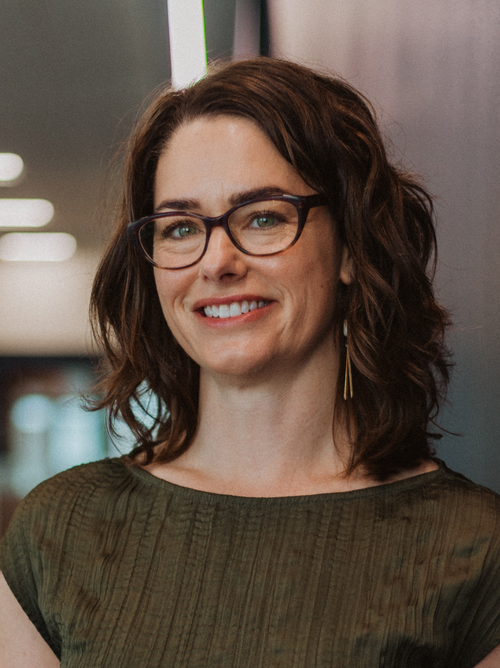 Practice Lead
Sarah Lechner
Sarah leads Coraggio's organizational-effectiveness practice and is your point of contact from the first conversation through activation. You work with her directly, backed by the full strength of our senior team.
Strategy is a daily practice of showing up, making choices, and keeping your team aligned and moving forward together.Sarah Lechner · Principal, Coraggio Group
Build an organization that can carry the strategy.
Start with a conversation. We'll help you name the real constraint, then scope the work to address it, one phase at a time.