
AI with Intent: You're Still Swapping Light Bulbs
When electricity came to manufacturing towns, factory owners did the obvious thing. They swapped their gas bulbs for electric ones. Twenty years later, the factories that won weren't the ones with better lighting.
They were the ones that had redesigned everything — floor plans, roles, supply chains, how decisions got made — around electric motors. The factories that only changed the bulb plateaued. The ones that rebuilt the whole operation around the new technology? Those are the ones we still study.
C.A. Clark, our AI strategic advisor and one of the more honest voices in this space, said it plainly on a recent episode of Destination Discourse: "That light bulb moment is still where most of us are."
He's not wrong. And the frustrating part is that the light bulb swap feels like progress. You add the tool. Someone mentions AI in the all-hands. A few people start using it regularly. You feel like you've done something. You have — just not the thing that matters.
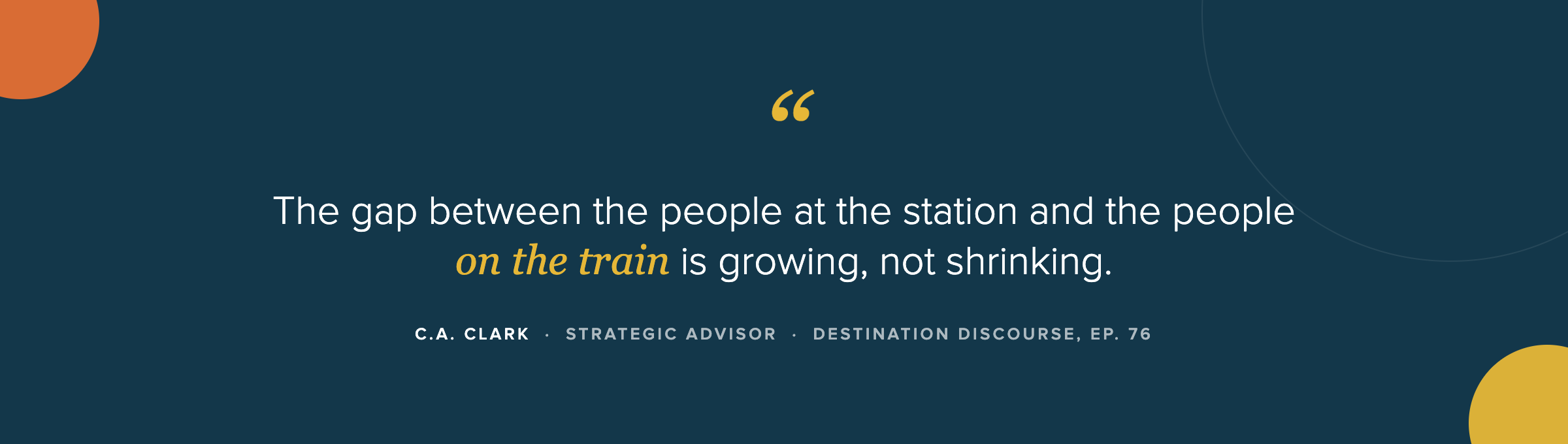
Here's the number that tells the story: 85% of people at Fortune 500 companies say they use AI. Clark's take on that stat is direct — it's "a really stupid question to ask, because there's no nuance to it." Most of them are using the free version like it's Google with extra steps. That's not capability. That's a slightly fancier search bar.
The question most organizations are asking right now is: what can AI do instead of me? That question leads straight to the light bulb swap — you find the obvious substitution, you make it, you move on. The harder question, the one most teams haven't gotten to yet, is: how do I actually work differently now that a nonhuman intelligence is part of the room?
Those questions land in completely different places. The first one optimizes what you already do. The second one redesigns the factory.
Clark puts it this way: "It's not about figuring out which parts of my job AI can do. It's about doing my job differently. The problem is how do I work differently with a nonhuman intelligence — and we don't know how to do that."
That's the actual work. And it's slower, more uncomfortable, and more valuable than anything happening at the tool level.
What the jobs that matter actually look like
Clark describes the roles that AI creates — not eliminates — in three categories. Trust: someone still has to stand behind the decision, own it, be accountable when it goes sideways. Taste: someone still has to know which of the thousand generated options will actually land — which strategy holds, which message resonates. The plumbing: someone has to keep the system running, catch the failure modes, fix it when it breaks.
Those aren't the jobs disappearing. They're the ones getting more valuable, faster. Leaders who can do all three at speed are going to be extraordinarily difficult to replace. Leaders waiting for the right AI tool to start developing that judgment are going to find themselves behind people who learned by doing.
On timing
"2026 is it," Clark says. "This is the time where you can actually do meaningful things in your job. If you're sitting on the fence waiting for the right moment — this is it."
That's not a pitch. It's a pretty clear-eyed read on where the window is. The organizations doing the factory redesign now will be two or three years into compounding that work when the ones still swapping light bulbs decide they're ready. Catching up to someone who learned by doing is a very specific kind of hard.
At Coraggio, we've been calling this approach AI with Intent — and Jen Gray-O'Connor wrote the foundational piece on what that actually means, including the ethical and human intelligence dimensions that make the whole thing durable. The brief that accompanies this article goes deeper on the operational side: where most organizations actually are, and what moving from principle to practice looks like.
The light bulb moment has passed. The question is whether you're ready to start on the factory.
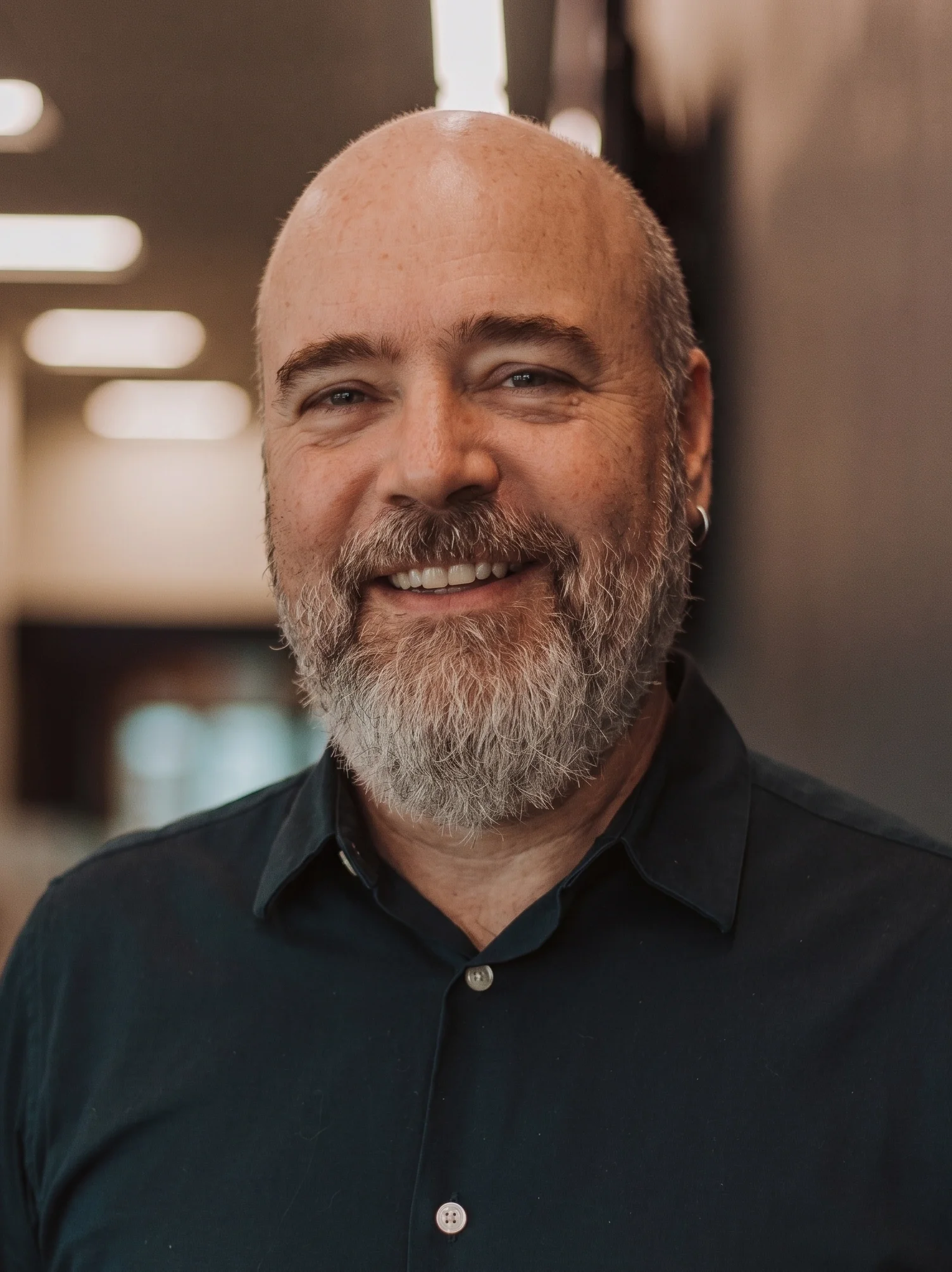
C.A. Clark is a Strategic Advisor to Coraggio Group and VP of AI at Miles Partnership. His conversation with Stuart Butler and Adam Stoker is Destination Discourse, Episode 76. For the foundational thinking behind AI with Intent, read Jen Gray-O'Connor's piece on ethical AI strategy for mission-driven organizations.